Healthcare Digital Marketing Strategy The Complete Guide for Medical Practices in 2026
Patients now use search engines, maps, reviews, websites, and social media before choosing a healthcare provider. Even after receiving a referral, many people research the practice online before calling or booking.
That is why healthcare digital marketing is essential for medical practices that want to increase visibility, build trust, and attract qualified patients. However, healthcare marketing requires more care than ordinary business promotion. Practices must protect patient privacy, publish accurate information, follow advertising rules, and create a trustworthy digital experience.
This guide explains how medical practices can build a practical digital marketing strategy for 2026.
What Is Healthcare Digital Marketing?
Healthcare digital marketing is the use of online channels to promote healthcare services, educate patients, and generate appointments. It includes website optimization, SEO, Google Business Profile management, content, social media, paid advertising, email, reputation management, and analytics.
The goal is not simply to increase traffic. Effective digital marketing for healthcare helps the right patients find relevant services and take a useful next step, such as calling, requesting an appointment, checking a location, or learning about treatment.
A successful strategy connects every digital touchpoint. A patient may first find a practice through Google Maps, read reviews, visit a service page, return through an ad, and then schedule.
Why Healthcare Providers Need Digital Marketing
Healthcare decisions increasingly begin online. A strong digital presence helps medical practices compete for attention and build credibility before the first conversation.
Digital marketing can help practices:
- Appear when patients search for nearby care
- Explain services clearly
- Build trust through useful content and reviews
- Reach new patients beyond referrals
- Promote priority services
- Measure which channels generate appointments
A clear medical marketing strategy also reduces confusion. Patients can learn about providers, locations, insurance, appointment options, and services before contacting the office.
Challenges Unique to Healthcare Marketing
Patient Privacy
Practices must protect patient information when using forms, call tracking, chat tools, email platforms, analytics, and advertising pixels. Every tool should be reviewed to understand what data it collects, where the information goes, and whether it is appropriate for a healthcare website.
Patient stories, photographs, testimonials, or treatment details should not be used without the appropriate permission and approval process.
Advertising Restrictions
Some healthcare products and services are restricted or require certification on advertising platforms. Campaigns should be reviewed before launch to ensure that ads, targeting, and landing pages follow current policies.
Clinical Accuracy
Healthcare content can influence real decisions. Website copy, blogs, ads, and social posts should avoid guarantees, exaggerated outcomes, or claims that a treatment is suitable for everyone.
Reputation Sensitivity
Review responses must remain professional and privacy conscious. A practice should never confirm publicly that someone is a patient or discuss treatment, diagnosis, billing, or appointment details.
Essential Healthcare Marketing Channels
A reliable strategy should combine owned, earned, and paid channels.
Owned channels include the website, blog, landing pages, and email list. Earned channels include reviews, organic rankings, local mentions, and referrals. Paid channels include Google Ads, social campaigns, and retargeting.
Using several channels reduces dependence on one platform and reaches patients at different stages of their decision..
Website Optimization
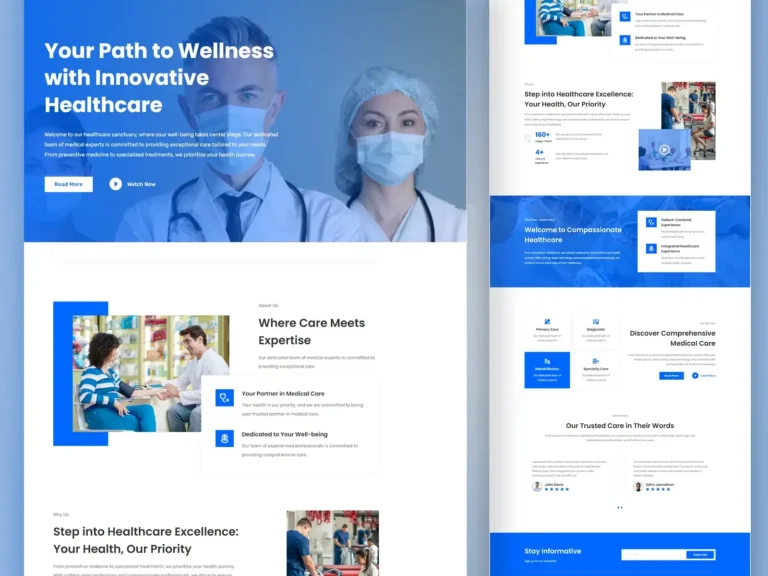
A well planned healthcare website should clearly explain the practice’s services, target patients, location, and appointment process. Professional healthcare website development also improves mobile usability, page speed, navigation, and conversion paths, making it easier for patients to find information and request care.
Important improvements include:
- Clear service and location information
- Dedicated pages for priority treatments
- Clickable phone numbers and short forms
- Fast, mobile friendly layouts
- Accessible navigation
- Strong calls to action
- Secure data handling
Each important service should have its own page explaining the treatment, who may need it, common concerns, what to expect, FAQs, and how to schedule.
Avoid vague homepage messaging. Patients should understand the specialty and location within seconds.
Local SEO
Local SEO helps practices appear for searches such as “medical practice near me,” “Pediatric dentist in Houston,” or “same day appointment nearby.”
To improve local visibility:
- Keep the practice name, address, and phone number consistent
- Create a dedicated page for each location
- Include location-specific services and providers
- Add maps, directions, parking details, and nearby communities
- Maintain accurate directory listings
- Build relevant local links
- Link service and location pages internally
Multi location practices should avoid duplicating the same page and changing only the city name. Every location page should provide original, useful information.
Google Business Profile
A complete Google Business Profile can improve visibility in Search and Maps. Each profile should include the correct business name, accurate categories, current hours, local phone number, website link, address, services, photos, and an appointment link where appropriate.
Practices should monitor calls, website clicks, direction requests, and reviews. Do not add extra keywords or locations to the business name unless they are part of the real world name.
Content Marketing
Content marketing helps practices answer patient questions and demonstrate expertise.
Useful topics include:
- Symptoms that may require an evaluation
- What to expect during treatment
- Appointment preparation
- Treatment comparisons
- Recovery and aftercare
- Preventive care
- Insurance and payment questions
- Frequently asked questions
Organize content into clusters. One main service page can link to supporting articles about symptoms, preparation, recovery, and treatment options.
Healthcare content should identify the author or reviewer, include credentials where appropriate, and be updated when information changes. Write for patients first and avoid repetitive articles created only to target keywords.
Social Media Marketing
Social media helps healthcare practices educate their communities, introduce providers, build trust, and remain visible between appointments. Professional social media marketing services can support a consistent content strategy across platforms while keeping messaging clear, accurate, and patient focused.
Useful content may include health tips, provider introductions, service explanations, office updates, preventive reminders, community involvement, FAQs, and short educational videos.
Practices should avoid giving personalized medical advice in public comments. Patients with individual concerns should be directed to an appropriate private communication channel.
PPC Advertising
Pay per click advertising can generate fast visibility for competitive services, new locations, same day care, and high intent searches.
Strong PPC campaigns should:
- Target specific services and locations
- Separate informational and appointment-focused searches
- Use dedicated landing pages
- Include clear calls to action
- Review search terms and negative keywords
- Track qualified calls and appointments
- Follow healthcare advertising policies
The landing page should closely match the ad. Sending every campaign to the homepage often reduces relevance and conversions.
A capable healthcare marketing agency should focus on qualified appointments, not only clicks or form submissions.
Email Marketing
Email marketing helps healthcare practices educate patients, promote services, share important updates, and maintain long-term relationships. Professional email marketing services can support targeted campaigns for provider introductions, seasonal health education, preventive care reminders, events, newsletters, and new service announcements.
Every message should include accurate sender information, a clear subject line, a valid business address, and an easy unsubscribe option. Practices should also avoid sharing unnecessary sensitive information or using purchased email lists.
Reputation Management
Online reviews strongly influence trust. Practices should ask for honest feedback consistently without pressuring patients to leave only positive reviews. Never buy fake reviews, write reviews on behalf of patients, or offer rewards only for positive feedback.
Public responses should be brief and professional. Thank the reviewer, acknowledge the feedback generally, and invite private contact when needed.
Review themes can reveal operational issues. Repeated comments about phone response, scheduling, wait times, communication, or billing should be shared internally.
AI in Healthcare Marketing
AI can help marketing teams work faster, but it should not replace strategy, compliance review, or clinical judgment.
Useful applications include topic research, content outlines, keyword organization, ad variations, email subject lines, reporting summaries, review analysis, and content repurposing.
Every AI assisted draft should be reviewed for accuracy, originality, tone, and compliance. Patient details should never be entered into unapproved AI tools.
For AI assisted search, practices should keep creating clear, original content that answers questions directly and demonstrates real expertise.
Measuring ROI
Healthcare marketing should be measured by business outcomes, not only impressions, rankings, or clicks.
Track meaningful conversions such as phone calls, appointment requests, online bookings, direction requests, qualified chats, and new patient registrations. Whenever possible, measure the full journey from marketing source to scheduled and attended appointment.
Important metrics include:
- Cost per qualified lead
- Conversion rate
- Call answer rate
- Scheduled appointment rate
- New patient acquisition cost
- Organic visibility
- Google Business Profile actions
- Review volume and sentiment
- Revenue influenced by marketing
Performance should also be reviewed by service, location, campaign, and landing page.
Common Mistakes
Medical practices often weaken results by:
- Using the same strategy for every specialty
- Publishing thin or repetitive content
- Ignoring mobile performance
- Depending on one marketing channel
- Measuring rankings instead of appointments
- Failing to track calls
- Installing tools without reviewing data practices
- Ignoring slow lead follow up
- Expecting immediate SEO results
- Promoting services the practice cannot support
Marketing works best when aligned with scheduling, call handling, provider availability, and the patient experience.
Final Healthcare Digital Marketing Checklist
Before launching or updating your strategy, confirm that your practice has:
- A fast, mobile friendly website
- Dedicated service and location pages
- Clear calls to action
- Accurate local listings
- Optimized Google Business Profiles
- Helpful, medically reviewed content
- A consistent social media plan
- Targeted PPC landing pages
- Privacy conscious email marketing
- An ethical review process
- Approved AI guidelines
- Reliable appointment and revenue tracking
Build a Stronger Digital Strategy With Rankeoure
Successful healthcare digital marketing is not about publishing more content or buying more traffic. It is about connecting strategy, patient needs, technology, compliance, and measurable practice goals.
Rankeoure provides healthcare digital marketing services that help medical practices improve visibility, strengthen trust, and generate meaningful growth. From website development and local SEO to content marketing, PPC, social media, email, and reporting, every channel should support the same objective: helping the right patients find and choose the practice.
A well planned strategy creates more than online exposure. It builds a dependable system for patient acquisition, brand credibility, and long term growth.